Precision-engineered high-productivity systems designed for high-resolution graphics, instant UV LED curing, and multi-substrate applications across local Gyeongsang production hubs.
Years of Printing R&D
Export Destinations
KC & CE Quality Certified
Support for Busan Industry
Busan, the maritime capital of South Korea and a key economic powerhouse in the Gyeongsang region, is undergoing a profound industrial transition. Traditionally dominated by shipping, logistics, and heavy manufacturing centered around the Noksan National Industrial Complex and the Mieum Industrial Complex, the city is rapidly integrating high-value, digitally-driven customization pipelines. Modern consumer trends, cosmetic brand headquarters (K-Beauty), medical device prototyping, and customized maritime signage demand production equipment that can output directly onto complex substrates with extreme durability.
The Search Intent Shift: Industrial buyers in Sasang-gu, Gangseo-gu, and Haeundae are no longer looking for basic eco-solvent plotters. Modern search intent focuses on "high-adhesion UV inks for marine grade metals", "fast-turnaround UV DTF film customization", and "KC-certified commercial UV printers with white ink recirculation". Our systems are optimized to address these specific performance criteria.
Busan’s major shipping corridors and logistics hubs require structural markings, safety instruction plates, and equipment labels that can withstand high salinity, UV exposure, and physical abrasion. Traditional screen-printed metal labels incur massive setup costs and slow turnaround times. Our industrial UV Flatbed Printing Machines deliver direct-to-substrate printing on anodized aluminum, stainless steel, and powder-coated sheets. Utilizing advanced UV-curable inks with high-performance adhesion promoters, the resulting output resists salt spray and scratching, fulfilling critical marine industry specifications.
Simultaneously, Busan’s booming tourist industry—extending from Gwangalli to Haeundae beach districts—has sparked an unprecedented demand for personalized, micro-run memorabilia. UV DTF (Direct-to-Film) transfers allow print shops to quickly customize irregular substrates (thermoses, glass bottles, and wooden plaques) without dedicated positioning jigs, turning physical storefronts into highly efficient print-on-demand nodes.
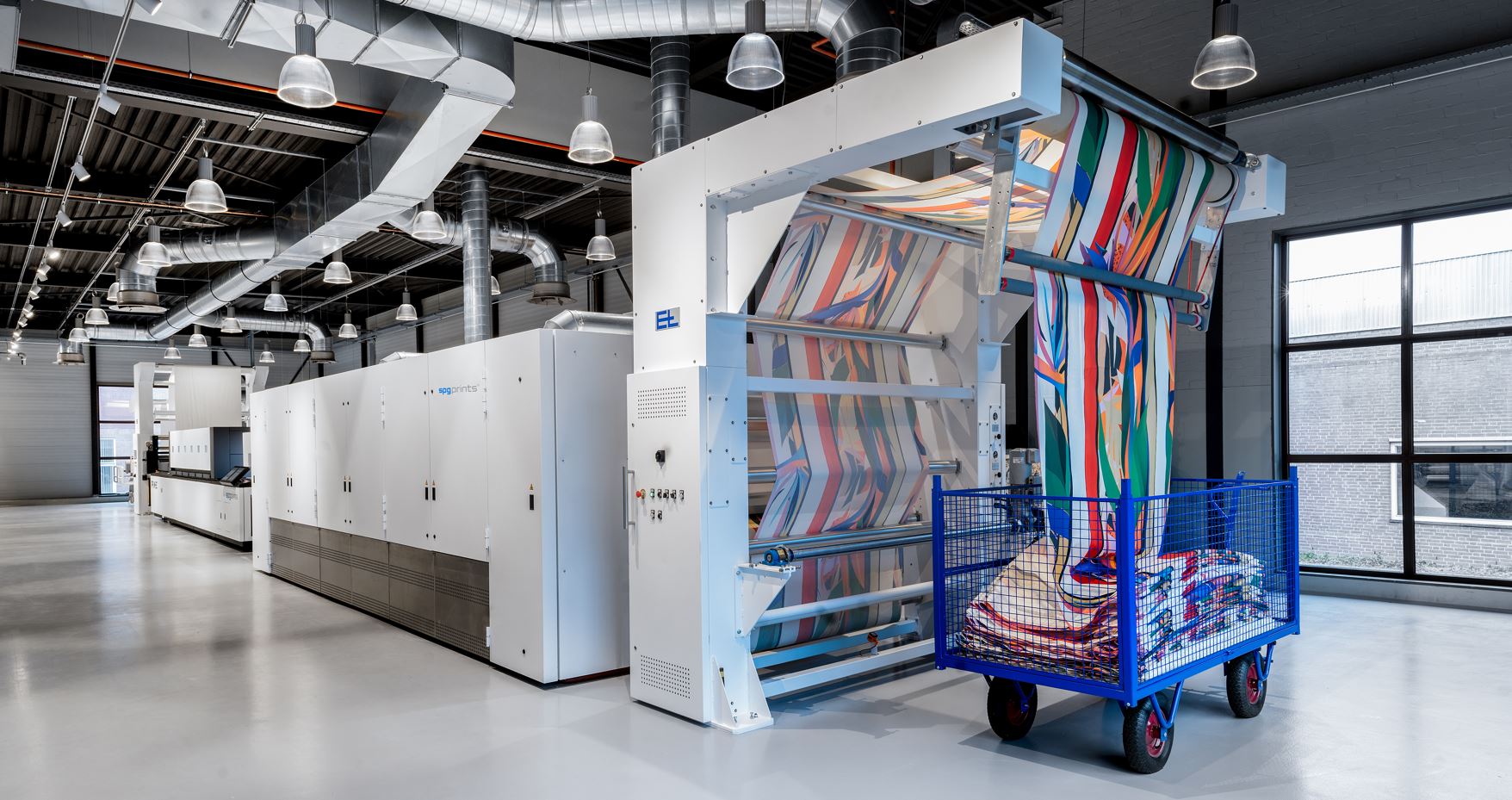
Industrial printing needs are rarely uniform. Depending on the district, a manufacturer's core performance metric might be throughput, chemical resistance, or 3D dimensional textures. Here is how Colvanta Print’s UV flatbed technology integrates with the commercial fabric of Busan:
Nampo-dong & Seomyeon Premium Packaging: Direct-to-bottle cosmetic packaging printing with tactile varnishes and high-opacity white ink bases. Our printers output high-definition text down to 2pt font directly onto acrylic jars, glass dropper bottles, and metallic packaging sleeves.
Noksan & Sasang Industrial Parks: Fabrication of heavy-duty control panels, mechanical dial faces, chemical warning signs, and indoor/outdoor architectural architectural acrylic signs. Resists grease, oil, solvents, and prolonged solar degradation.
Centum City Tech Startups: High-precision printing on ABS, polycarbonate, and silicone enclosures for smart sensors, medical instruments, and maritime communication gear. Supports localized varnish embossing for status LED indicators.
The modern digital printing landscape demands highly reliable physical architectures. Our research and development center operates on a strict technical roadmap, upgrading machine components to address industrial performance bottlenecks.
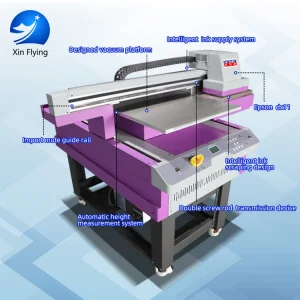
Transitioning to variable grayscale printheads like Epson i3200-U1 and Ricoh G5/G6. Capable of jetting droplet sizes from 3.5pl to 21pl, achieving photorealistic gradients alongside deep solid spot colors.
Deployment of micro-pressure negative ink control and continuous white ink circulation. Prevents titanium dioxide settling in white inks, drastically reducing printhead clogging and maintenance downtime.
Integration of water-cooled UV LED lamps with adjustable intensity. Features instant curing times at significantly lower temperatures, preventing thermal distortion on thin PVC sheets and films.
Incorporating dual-guide THK silent linear rails and aviation-grade milled aluminum crossbeams. Guarantees mechanical movement deviations remain under 0.01mm across long runs.
Located in the heart of China’s high-tech manufacturing capital, Shenzhen Colvanta Print Co., Ltd. benefits from a highly integrated digital printing industrial supply chain. This strategic proximity enables us to source top-tier mechanical castings, electronic control boards, and specialized optical lenses at unparalleled speed and scale. Unlike localized trading firms or distributors in South Korea who mark up machinery costs, we operate on a direct-to-enterprise model that cuts out intermediary overheads.
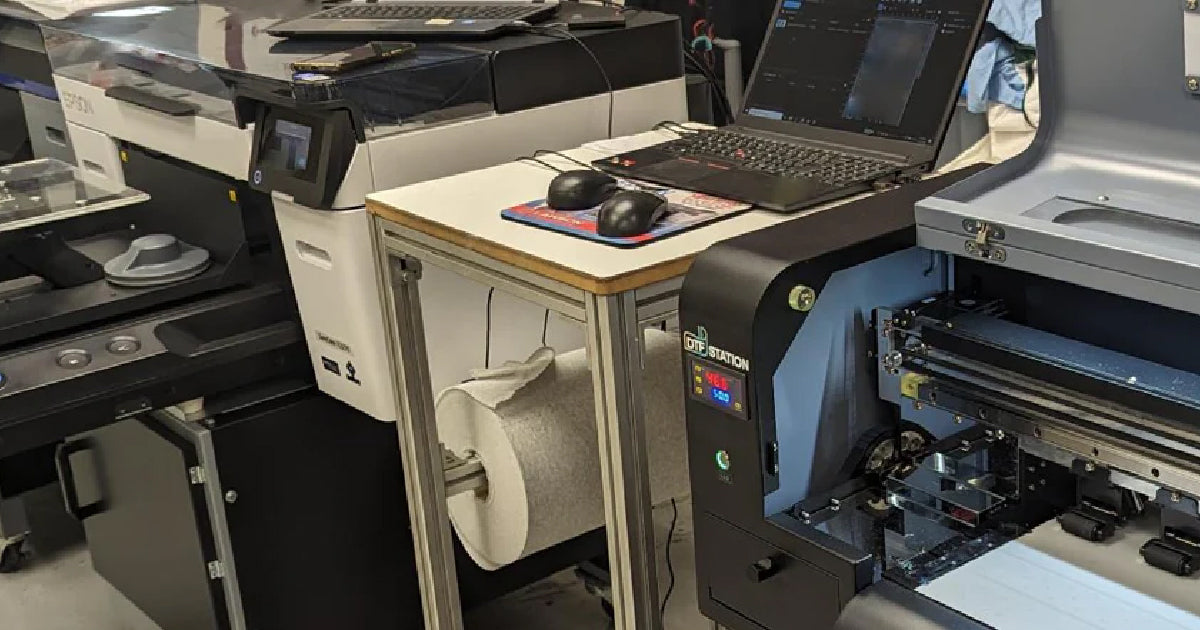
Every single UV flatbed machine leaving our Shenzhen assembly line undergoes rigorous quality testing before ocean transit to Busan. Our quality control protocol includes:
Purchasing capital equipment internationally requires transparent logistics and strict regulatory compliance. Colvanta Print ensures that every machine exported to Busan aligns with South Korean legal frameworks.
Busan Harbor’s advanced maritime facilities make ocean freight from our Shenzhen logistics hub incredibly fast and cost-effective. Shipping transit times typically range from 4 to 7 days. We handle all export documentation, commercial invoicing, and origin certificates (Korea-China FTA Form FK), allowing you to claim preferential tariff treatments and significantly reduce import duties.
South Korea’s safety regulations are strictly monitored under the KC (Korea Certification) framework. Our industrial machinery utilizes CE-certified components, and we configure electrical grids to match the standard South Korean 220V/60Hz alternating current without needing bulky step-down transformers. All electrical enclosures are isolated and grounded to prevent static discharge on plastic media.
We solve the "distance barrier" through digital twins and structured onboarding. Our engineers provide remote calibration via video and remote desktop control (TeamViewer/AnyDesk). RIP software like Maintop, FlexiPRINT, and Photoprint are pre-configured with dedicated ICC profiles tailored to local inks, ensuring correct color reproduction out of the box. Spare parts, including printhead dampers, caps, UV LED modules, and boards, are dispatched via DHL/FedEx for next-day delivery to Busan.
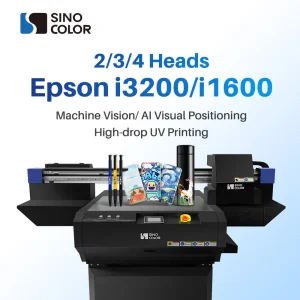
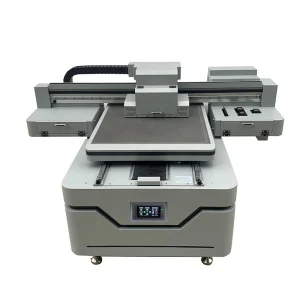
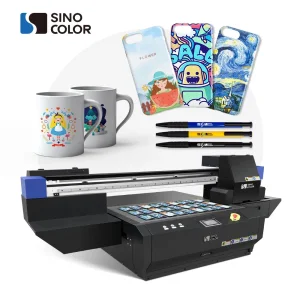
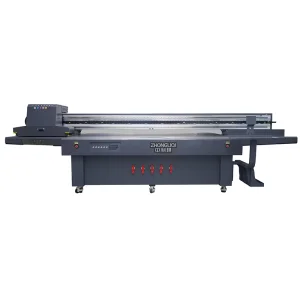
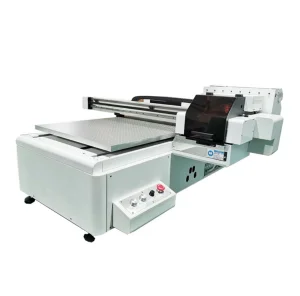
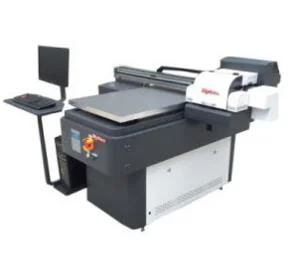
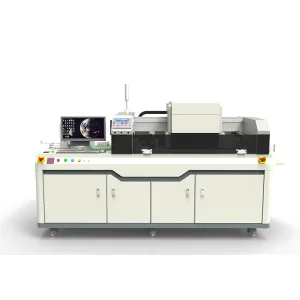
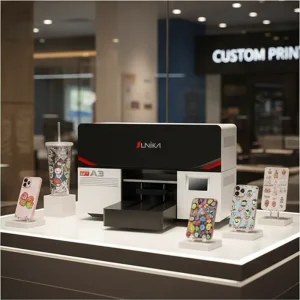
Explore our diverse selection of digital printers, custom configured to handle flexible sheets, rigid panels, cylindrical packaging, and dynamic industrial labeling.
Providing technical clarity on ink performance, head maintenance, importing procedures, and industrial workflow integration.
Because maritime environments have high relative humidity and salt content, metal prints require high outdoor durability. Using our standard industrial UV inks along with our high-adhesion metal primer, outdoor prints can withstand 3 to 5 years of direct marine atmospheric exposure without peeling or noticeable fading. For absolute longevity, we recommend utilizing an inline varnish topcoat during the print pass to act as a secondary UV absorber and barrier coat.
White UV-curable ink contains heavy Titanium Dioxide (TiO2) pigments, which naturally settle down in the ink lines when stationary. If left alone, these particles group together and clog the micro-nozzles (especially on precision Epson i3200 or Tx800 printheads). Our integrated circulation system continuously cycles the white ink from the ink sub-tank directly through the printhead carriage and back, preventing pigment precipitation and keeping the print nozzle path clear.
Colvanta Print provides a complete export documentation package including: Bill of Lading (B/L), Commercial Invoice, Packing List, and the Korea-China FTA Certificate of Origin (Form FK). The FTA certificate is crucial because it reduces import tariffs to near zero under bilateral agreements. You will only need to clear the local VAT (normally 10% in South Korea) through your local customs broker when the cargo clears the Port of Busan.
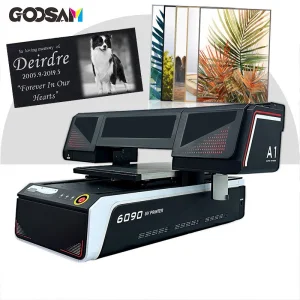
Yes. Our mid-sized flatbed models (such as the 6090 and 9060 series) support custom rotary attachment jigs. These jigs rotate the object in sync with the gantry axis movement, allowing full 360-degree printing on stainless steel flasks, glass jars, water bottles, and plastic tubes. Our software matches the rotation speed to the print resolution to avoid horizontal image distortion.
We supply industry-standard software such as Maintop 6.1 and offer configurations with FlexiPRINT/Photoprint Colvanta Edition. These software packages natively handle separate spot color channels (Spot 1 for White, Spot 2 for Varnish). By setting up spot layers in design software like Adobe Illustrator or Photoshop, the RIP engine instructs the UV printer to apply relief patterns, textured gloss effects, or matte overlays precisely on target areas.
 Colvanta Print